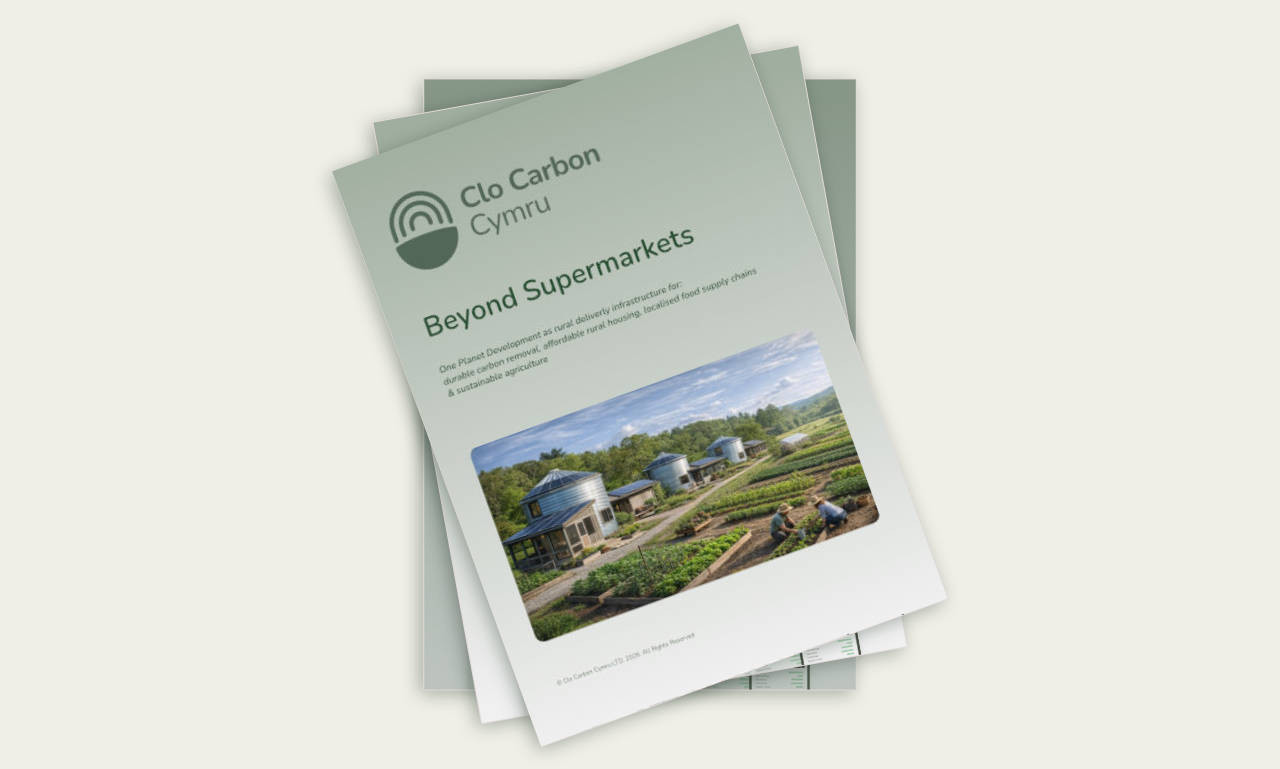
Beyond Supermarkets

Rebuilding the foundations of the rural economy in Wales, one farm at a time.

Beyond Supermarkets

Rebuilding the foundations of the rural economy in Wales, one farm at a time.

Wales in 2026

A System Failing on Multiple Fronts

The conversation about the future of the UK food system has continued for decades.


It has produced analysis, policy, and review. It has not produced structural change. We no longer have time for conversations and incremental reform.

July 2026

  • The driest recorded in Wales since 1836
  • Just 8% of Wales' long-term average July rainfall
  • Joint-warmest July on record & sunniest calendar month ever observed
  • Rivers Clwyd, Alwen, Alyn, Dyfi and Wye all recorded historic monthly minimum flows
  • Grass shortages have halted livestock grazing & feed-crops are failing
  • High heat and dry brushwood triggered severe, widespread wildfires

Climate Instability

Climatic instability is now a fixed feature of farming in Wales. Drought, flooding, and unseasonal conditions disrupt production with increasing frequency. 

Meanwhile, the food system has grown more centralised and more dependent on extended supply chains that were designed to function under stable conditions that no longer exist.

Economic Extraction
The £100 million question

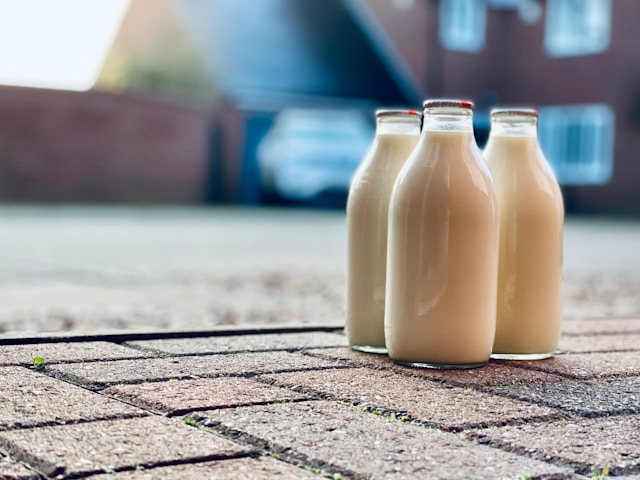
In the twelve weeks to March 2026, farmgate milk prices fell to their lowest level in years. Retail dairy prices rose by more than 5% over the same period.


NFU Cymru estimates that between October 2025 and March 2026, approximately £100 million was removed from the Welsh rural economy as farmers were paid below the full cost of production.


That money did not disappear. It was captured by intermediaries who operate in near-complete insulation from the consequences of their own pricing decisions. When a very small number of retail buyers wield that kind of power with no accountability for its effects, the result is not market inefficiency, it is both an economic and ethical failure of the current food system.

  • 1 in 8 Welsh households are food insecure
  • In the most deprived areas, 37% face severe food deprivation
  • 1 in 4 Welsh adults have cut portions or skipped meals to manage costs
  • 1 in 8 parents report their children are going without food
  • 31% of food bank users in Wales are in paid work
  • Welsh farmers have been documented using food banks, squeezed by input costs and cash-flow collapse

Food Insecurity

Food insecurity in Wales is widespread and deepening, and it is no longer limited to those out of employment or requiring state support. Working households, children and even the farmers who produce our food are going without:

Rural Housing

Rural housing costs have broken away from agricultural wages, making it harder to live where the food is grown.

Farm labourer: £25,000 – £30,000/year
Average rural property: £250,000

Beyond Supermarkets

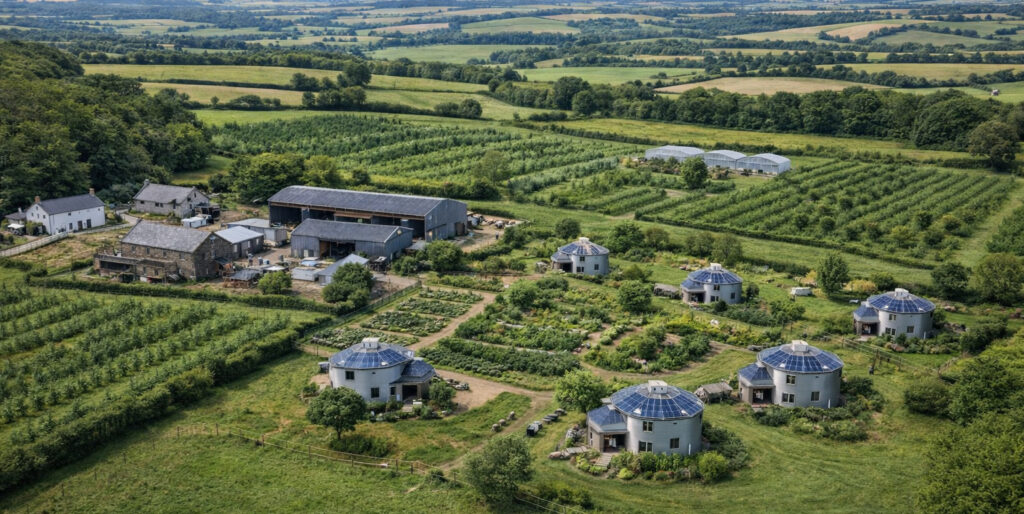
Our framework positions capital formation, resident labour, processing capacity, and verified carbon removal as mutually reinforcing components of a single economic system.

How It Works On The Farm

The Beyond Supermarkets report introduces a theoretical economic framework that adapts the classic inverse relationship (IR) between farm size and productivity to contemporary Welsh agricultural systems.


The report models the economic impact of structurally reversing this paradigm by introducing a hyper-dense workforce of up to 20 co-operative or family workers onto an average-sized Welsh dairy/mixed farm holding. The model was tested across the full range of Welsh farm types, but performs best on dairy farms, where milk is already being produced and existing infrastructure, output, and market routes absorb the added workforce most efficiently.

Who Makes It Work

Built by the people who live and work it

Existing Dairy Farmers

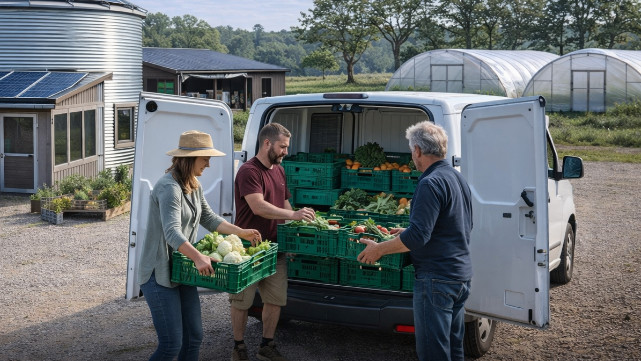
A route through the volatility, not an exit from dairy. Most dairy farmers face volatile input costs, razor-thin farmgate returns, labour shortages and little control over the value their own production creates. The model offers access to labour, new capital, on-farm processing, diversified income and locally embedded markets. You don't give up dairy. You reorganise around a broader, more resilient model.
New Farm Enterprises

A farm enterprise runs on a mix of skills: the trades that keep it standing (electricians, plumbers, welders, mechanics), the disciplines that keep it solvent and seen (accountants, marketers, digital communicators), the hands that grow and make (horticulturists, livestock keepers, food processors), the people who measure and verify (ecological recording, carbon verification), and those who hold the community together (nurses and carers, governance). In return: a home on the land, a stake in the enterprise, and a secure livelihood built alongside others.
Let's Build Together

Machinery made farming efficient because the market since the 1940s has demanded bulk to feed a growing urban population. That demand still exists, but extreme weather, driven by climate breakdown, is creating a problem machinery wasn't built to solve: soil losing carbon and moisture faster than it can be replaced.


The long-held belief that farmers alone can grow our food through the most volatile growing conditions in living memory no longer holds. Food production is now a social issue: it affects everyone who eats.


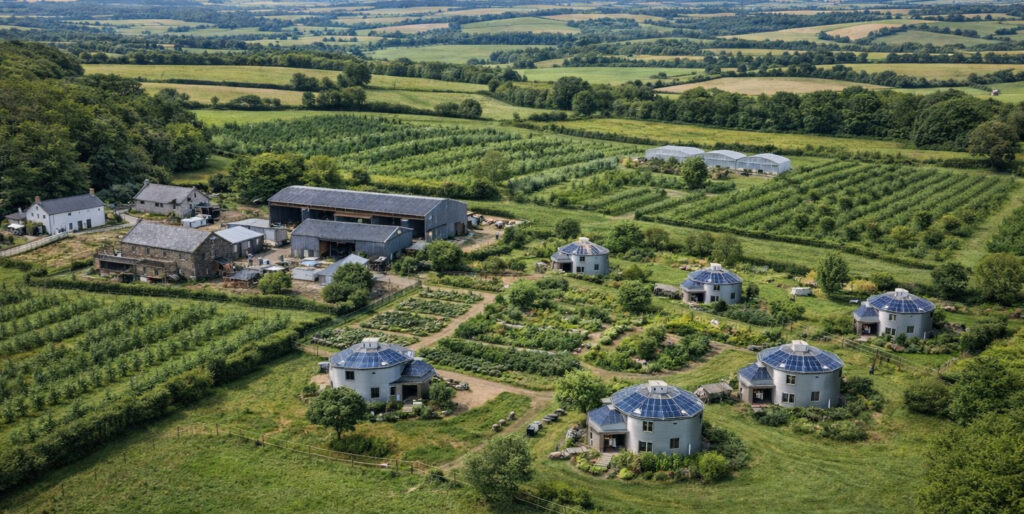
The Beyond Supermarkets report proposes farm-embedded rural settlements functioning as regional provisioning infrastructure, enabling labour continuity, diversified food production, low-carbon processing, and long-term stewardship of agricultural landscapes.


These systems can supply staple foods through short supply chains while supporting ecological land management and durable carbon removal.

  • Existing dairy farmers Explore reorganising your farm
  • Start a farm enterprise Register your interest as a future resident-partner.
  • Public bodies and policy partners Align a programme with us.
  • Investors and partners Help establish & build the first farm enterprises
The Details

Beyond Supermarkets In Full

We argue that the traditional economic pitfall of the Law of Diminishing Marginal Returns can be bypassed through a complete structural pivot from extensive livestock grazing to a high labor-to-land ratio model.

The framework substitutes expensive capital inputs (machinery, fossil fuels, synthetic fertilisers) with meticulous, manual land management, multi-cropping, durable carbon removal via efficient biogenic systems and on-farm value-added processing.